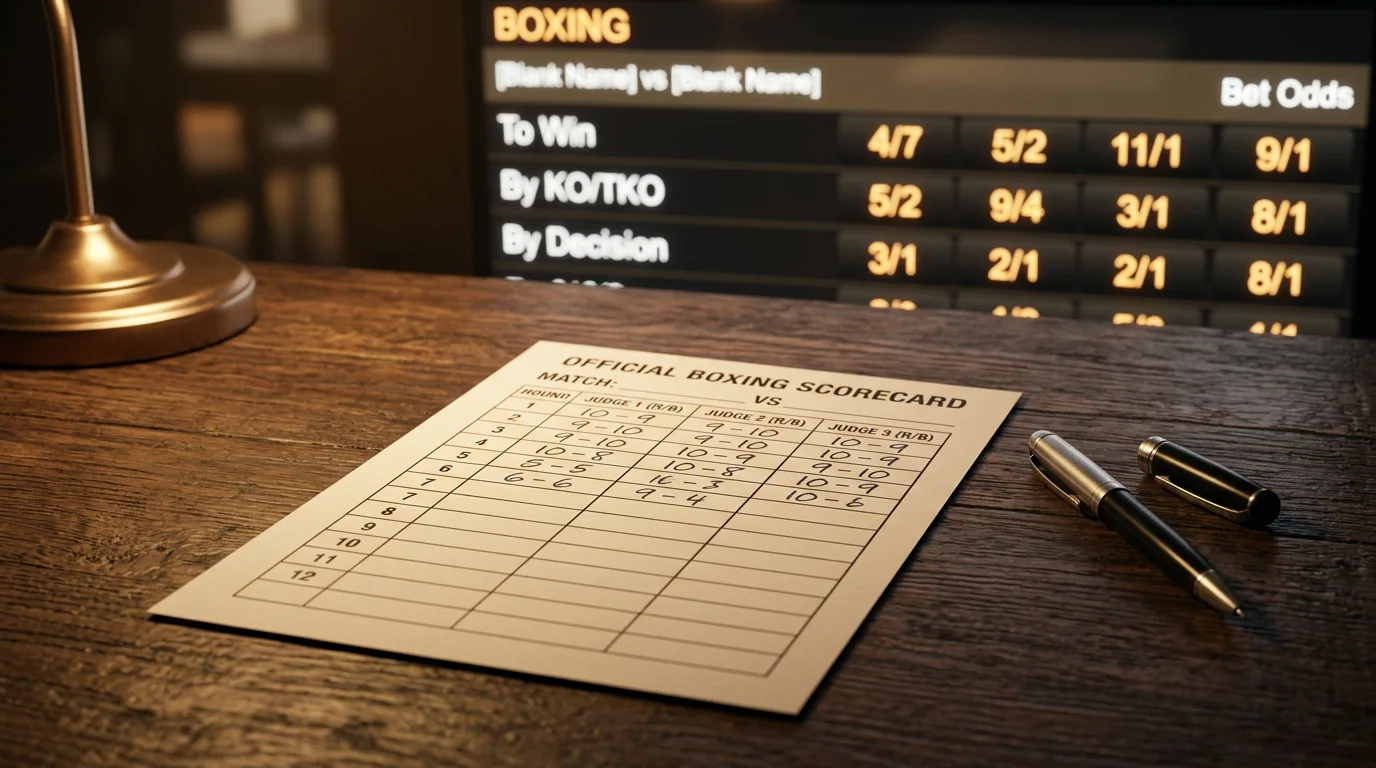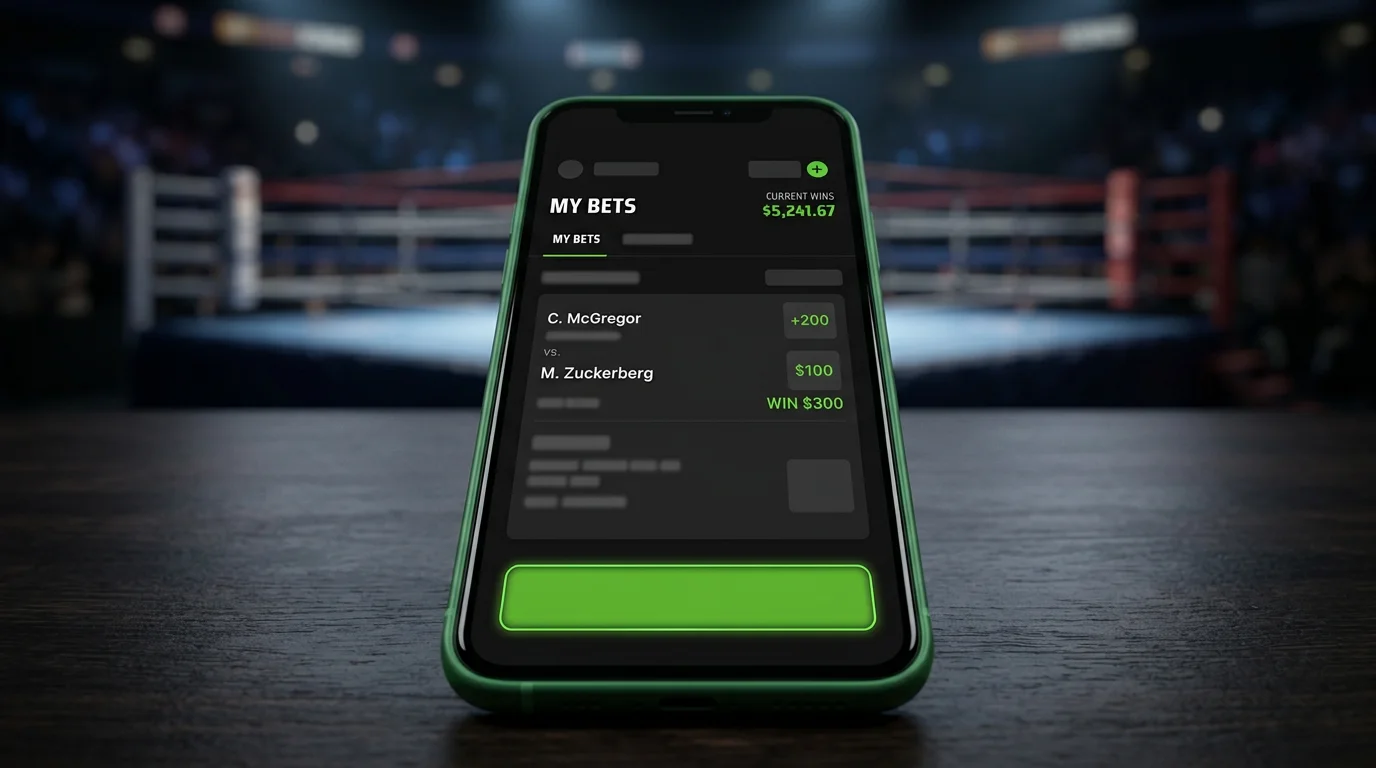
Boxing Wagering Analysis
How to Bet on Boxing in the UK: The Complete Guide
 Available in US
I placed my first boxing wager on a Carl Froch undercard fight in 2020 and lost it inside two rounds. Six years later, I still remember the sting, not because of the money but because I had no framework for what I was doing. I picked a name I recognised, ignored the stylistic mismatch, and treated a 12-round contest like a coin toss. Everything I have learned since then about markets, odds mechanics, fighter analysis, and the regulatory machinery that keeps this industry functioning grew out of that first, expensive lesson.
Boxing wagering sits at a fascinating intersection of sport and probability. Unlike football or tennis, where dozens of data points stream in every match, a boxing bout compresses its story into a handful of rounds between two people in a confined space. That compression is precisely what makes it attractive to bettors who do the work. The global boxing betting market runs into billions of dollars and is growing faster than the wider sports betting industry. In the UK, the gambling sector has posted year-on-year growth that defies the “mature market” label, a trajectory driven overwhelmingly by online platforms, and one that directly shapes the depth and competitiveness of boxing markets available to British punters.
This guide is the resource I wish had existed when I started. It covers every bet type available on fight night, walks through odds formats used by UK bookmakers, examines how the Netflix streaming revolution has redrawn the audience map, and addresses the regulatory framework that protects punters. Whether you have never placed a boxing bet or you are looking to sharpen an existing approach, the goal is the same: fewer decisions based on gut feeling, more decisions grounded in data and structure.
Table of Contents
- What Six Years of Boxing Analysis Taught Me About Wagering
- Why Boxing Remains One of the Sharpest Betting Sports
- The UK Betting Landscape in Numbers
- How Boxing Betting Works: From Fight Card to Payout
- Core Bet Types Every Punter Should Know
- Reading Boxing Odds: Fractional, Decimal, and American
- Placing Your First Boxing Bet: A Step-by-Step Walkthrough
- The Netflix Era: How Streaming Reshaped Boxing Wagering
- UK Regulation and Betting Integrity
- Responsible Gambling Tools and Self-Exclusion
- Frequently Asked Questions
What Six Years of Boxing Analysis Taught Me About Wagering
- Boxing betting is a £3.6 billion global market growing at 8.1% annually, and UK punters have access to deeper fight-night markets than any other country.
- Six core bet types (moneyline, round betting, method of victory, over/under rounds, propositions, and accumulators) cover virtually every angle of a bout.
- Fractional odds remain the UK standard, but understanding decimal and American formats unlocks sharper line comparisons across operators.
- The Netflix streaming era has driven boxing viewership into the tens of millions per event, reshaping who bets and when.
- UK regulation through the Gambling Commission provides strong punter protections, but responsible bankroll management is ultimately your own responsibility.
Why Boxing Remains One of the Sharpest Betting Sports
A few years back, a casual bettor I know asked me why I spend hours analysing a single fight when he could just bet on a full weekend of Premier League fixtures in the same time. My answer was simple: in football, the bookmaker has thousands of historical data points, squad analytics, and algorithmic models refining every line. In boxing, two fighters step into a ring and the outcome hinges on variables that algorithms struggle to quantify. That gap between what the market prices and what a prepared analyst can identify is where value lives.
£3.6 billion
Global boxing betting market valuation, per Verified Market Reports
8.1% CAGR
Projected annual growth rate through 2033
£6.6 billion
Total global boxing industry value in 2026, per Future Data Stats
Boxing is not a niche afterthought within the sports betting world. The global boxing industry itself is valued at £6.6 billion in 2026, projected to reach £11 billion by 2033 at a 7.5% CAGR, according to Future Data Stats. The broader sports betting market exceeded £99 billion in 2026, per The Business Research Company, and boxing punches well above its weight relative to its share of that total because each major fight card concentrates enormous public interest into a single evening. Andrew Rhodes, chief executive of the UK Gambling Commission, has noted that overall gambling participation “remains steady at just under half the adult population engaging with some form of gambling on a regular basis,” and that when certain products grow, they tend to do so at the expense of others. Boxing’s ability to capture mainstream attention through spectacle events gives it a structural advantage in competing for that wagering spend.
The global sports betting market crossed £99 billion in 2026, and boxing’s share is growing faster than the industry average, driven by streaming-era audience expansion and the rise of crossover events.
What makes boxing particularly sharp for the bettor willing to do the work is the sport’s inherent unpredictability within a structured framework. A 12-round championship bout offers dozens of micro-markets (exact round, method of victory, total punches, knockdown specials), each of which can be assessed through fight-tape analysis, stylistic matchup evaluation, and training-camp intelligence. The bookmaker sets a price based on public perception and historical patterns. The analyst who watches tape, tracks corner changes, and understands southpaw-orthodox matchup dynamics has a genuine edge. No algorithm can watch a fighter’s eyes during the ring walk and read whether the weight cut went badly.
That combination of accessible boxing betting markets, concentrated public interest, and analytical depth is what kept me in this niche for six years and makes this the right starting point for anyone serious about wagering on the sport.
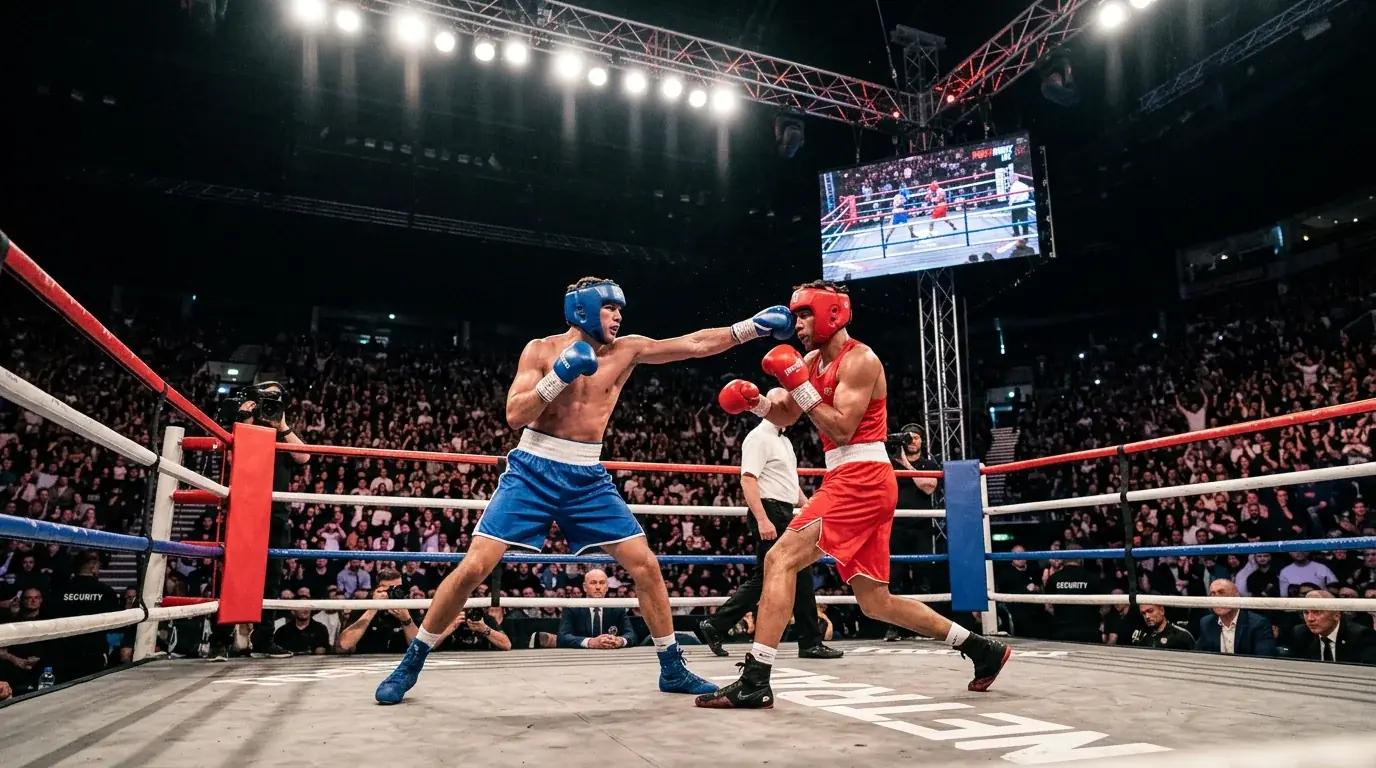
Boxing’s sharpness as a betting sport only matters if you understand the market you are operating in. The UK market is unlike any other in the world.
The UK Betting Landscape in Numbers
When I first started tracking boxing betting seriously, I assumed the UK market was mature and stable — a slow-growth industry grinding out incremental gains. The actual numbers tell a different story entirely. The Gambling Commission’s latest industry statistics show total gross gambling yield of 16.8 billion pounds for the year ending March 2025, representing 7.3% year-on-year growth. Strip out lotteries and the picture sharpens further: non-lottery GGY hit 12.6 billion pounds, up 9.3% year on year. Far from a static market.
16.8bn Pounds
Total UK gross gambling yield, year ending March 2025
7.8bn Pounds
Remote casino, betting, and bingo GGY — 46% of the total market
5,825
Betting shops remaining in the UK, declining for the 11th consecutive year
The dominant force driving that growth is online. Remote casino, betting, and bingo — the category that captures most online sports wagering — generated 7.8 billion pounds in GGY, a 13.1% year-on-year increase accounting for 46% of the entire market. Non-remote betting, the high-street bookmaker, managed just 2.5 billion pounds with a meagre 0.7% increase. The number of physical betting shops has fallen to 5,825 as of March 2025, marking the eleventh consecutive year of decline. The direction is unmistakable: the punter who bets on boxing in 2026 does so overwhelmingly through a screen, not over a counter.

Roughly 8% of UK adults placed an online bet on sports or racing within the previous four weeks, according to the Gambling Commission’s Gambling Survey for Great Britain. That translates to millions of active accounts — and boxing’s share of that activity spikes dramatically around major fight cards.
For boxing bettors specifically, these macro numbers matter because they shape what operators offer. A market growing at double digits attracts investment in product depth — more markets per fight card, better in-play functionality, and competitive odds across the moneyline and exotics. The UK sports betting market is projected to reach £17 billion by 2030 at an 11.4% CAGR, per Grand View Research, and Europe as a whole commands 41% of the global sports betting share. When bookmakers compete for a growing pie, the punter benefits through tighter margins and broader coverage.
The flip side of this growth is regulatory intensity. The Gambling Commission has become increasingly assertive, and I will cover exactly how in the regulation section below. For now, the key takeaway is structural: the UK market is large, growing, moving online, and regulated by an authority with expanding enforcement powers. Every boxing bet you place sits within that framework.
How Boxing Betting Works: From Fight Card to Payout
The first time I sat down to bet on a full fight card, I was overwhelmed by the sheer number of options on screen. Main event, co-main, undercard bouts, dozens of markets per fight. It felt like trying to read a menu in a language I half-understood. Once I broke the process down into its mechanical steps, everything clicked. Boxing betting follows a clear sequence, and understanding that sequence removes most of the confusion.
A fight card is announced weeks or months in advance. Bookmakers release opening odds, initial prices reflecting each fighter’s perceived chance of winning. These odds shift as money flows in, as training-camp news breaks, and as the weigh-in confirms both fighters made weight. You, the punter, assess the card, select a market (who wins, how they win, when they win), place a stake at the available odds, and wait for the result. If your selection lands, the payout is your stake multiplied by the odds. If it does not, the stake is lost.
Fight card — the full schedule of bouts on a given event night, typically consisting of a main event, a co-main event, and several undercard fights.
Example: Reading a Simple Moneyline
| Fighter A | Fighter B |
|---|---|
| 4/9 (favourite) | 7/4 (underdog) |
A 9-pound stake on Fighter A at 4/9 returns 4 pounds profit plus your 9-pound stake if Fighter A wins. A 4-pound stake on Fighter B at 7/4 returns 7 pounds profit plus your 4-pound stake if Fighter B wins.
Payout Calculation: Fractional Odds
1. Choose your market: Fighter B to win (outright).
2. Odds offered: 7/4.
3. Stake: 20 pounds.
4. Profit = stake x (numerator / denominator) = 20 x (7 / 4) = 35 pounds.
5. Total return = profit + stake = 35 + 20 = 55 pounds.
The timing of your bet matters. Odds at the point of announcement are often softer — less refined by market activity, than odds an hour before the ring walk. Conversely, late money from informed bettors can shift lines sharply. I have seen a fighter drift from 2/1 to 5/2 in the final 48 hours because a camp source confirmed a hand injury. Paying attention to line movement is not an advanced skill; it is a basic discipline. The odds you accept at the moment you click “place bet” are the odds you are locked into, regardless of what happens next.
Ring walk — the moment a boxer walks from the dressing room to the ring, typically minutes before the bout begins. It marks the point after which pre-fight odds are finalised and in-play markets take over.
One mechanical point that trips up newcomers: settlement. Not every result is straightforward. A fight can end by knockout, technical knockout, disqualification, corner retirement, or points decision. It can also end in a draw, a no-contest, or a cancellation. Each of those outcomes triggers different settlement rules depending on the market you chose. Understanding how your bookmaker settles edge cases — before you place the bet. It is the difference between a surprise void and a planned position.
Core Bet Types Every Punter Should Know
I spent my first year betting on boxing using exactly one market: the moneyline. Pick the winner, wait for the result. It took an embarrassingly long time to realise I was leaving analytical value on the table by ignoring the half-dozen other markets that let you express a more specific view on how a fight unfolds. Each market below represents a different thesis about a bout — and the sharper your thesis, the better the odds you will find.
Broad Markets
Moneyline, over/under rounds. Lower odds, higher probability. Suitable when your view is directional but not specific.
Specific Markets
Exact round, method of victory, propositions. Higher odds, lower probability. Suitable when your analysis points to a particular outcome pathway.
Moneyline (Outright Winner)
The moneyline is the simplest boxing bet: which fighter wins the bout? No qualifiers about how or when, just the result. If your fighter wins by first-round knockout or split decision after 12 gruelling rounds, the moneyline pays the same.
Moneyline Example
| Fighter A (Favourite) | Fighter B (Underdog) |
|---|---|
| 1/3 | 5/2 |
At 1/3, you stake 30 pounds to profit 10 pounds. At 5/2, a 10-pound stake returns 25 pounds profit. The draw is typically a separate market — meaning a draw voids most moneyline bets and your stake is returned.
The moneyline is where most boxing betting volume concentrates, which means it is also where bookmaker margins tend to be tightest. For heavy favourites, the odds compress to a point where the risk-reward ratio becomes unattractive. Laying 1/5 to back an expected winner ties up capital for minimal return. I find the moneyline most useful in competitive matchups where the market is genuinely split, not in lopsided affairs where your analytical edge is better expressed through round or method markets.
Round Betting and Group Round Betting
Round betting asks you to predict the exact round in which a fight ends. It is the highest-odds standard market in boxing, regularly offering prices of 10/1 or longer, because pinpointing the precise round of a stoppage is genuinely difficult. Group round betting softens the demand: instead of picking round 7, you might back rounds 7-9, accepting shorter odds for a wider window.
Group Round Bet Calculation
1. Selection: Fighter A to win in rounds 4-6.
2. Odds offered: 5/1.
3. Stake: 10 pounds.
4. Profit if Fighter A stops their opponent in round 4, 5, or 6 = 10 x 5 = 50 pounds.
5. Total return = 50 + 10 = 60 pounds.
If the fight ends in round 3 or round 7, or goes to a decision, the bet loses.
I use round betting primarily when I have a strong view on a fighter’s fading cardio or a specific point in the bout where a style clash will become decisive. A pressure fighter facing a fading boxer? Rounds 7-9 group bets have served me well. The key is having a specific reason for your round selection rather than chasing long odds.
Method of Victory
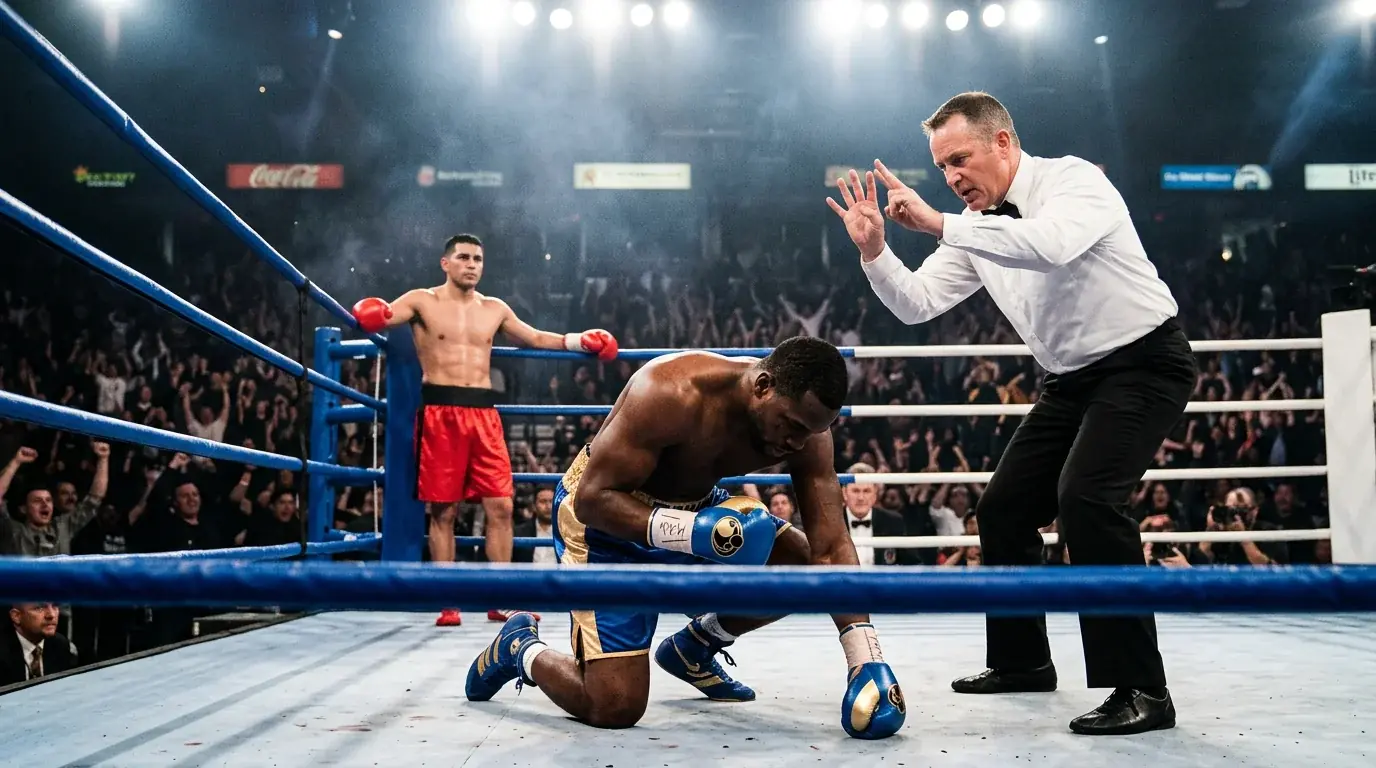
Method of victory markets let you back not just who wins but how. The standard divisions are KO/TKO (including corner retirement and referee stoppage), decision (unanimous, split, or majority), and disqualification. Some bookmakers subdivide further, separating KO from TKO or offering individual decision types.
KO/TKO Bet
Pays when the fight is stopped before the final bell. Best suited to matchups involving heavy punchers or fighters with suspect chins. Typically priced between 2/1 and 6/1 depending on the bout.
Decision Bet
Pays when the fight goes the full distance and is decided on the scorecards. Favoured in matchups between defensive, technically proficient fighters. Often priced shorter in women’s boxing due to two-minute rounds.
The analytical value of method markets lies in style assessment. Two volume punchers with iron chins? Decision probability rises. A one-punch knockout artist against a fighter moving up in weight? KO/TKO probability climbs. This is where watching fight tape directly translates into betting edge because you are not guessing who wins but diagnosing how the fight architecture is likely to play out.
Over/Under Rounds
Over/under rounds — also called totals, ask you to predict whether a fight will last longer or shorter than a set number of rounds. The line is typically set at a half-round to avoid pushes: over/under 7.5 rounds, for instance. If the fight ends during round 8 or later, the over wins. If it ends in round 7 or earlier, the under wins.
Totals are my workhorse market when I have a strong view on fight duration but less confidence in who actually wins. A bout between two ageing heavyweights with declining punch resistance? The under becomes attractive regardless of which fighter lands the decisive shot. Totals strip the who out of the equation and focus purely on the when, a useful simplification when the moneyline feels like a coin toss.
Proposition Bets and Specials
Props, short for propositions, cover everything outside the core markets. Will there be a knockdown in the fight? Which fighter lands the first knockdown? Total punches over/under a set number? Will the fight go the distance? Some operators even offer props on the national anthem duration or the colour of a fighter’s shorts on major cards.
The punches market, offered by a growing number of UK bookmakers, deserves particular attention. It sets a line on total punches landed by one or both fighters, creating a totals-style bet that rewards granular knowledge of output rates. A volume puncher facing a counter-puncher creates a very different punches line than two pressure fighters going to war. These markets are newer, which means bookmaker pricing can be less refined, exactly the conditions where an informed bettor can find genuine value.
Reading Boxing Odds: Fractional, Decimal, and American
I once watched a friend stare at a screen showing 4/9 next to a fighter’s name and genuinely not know whether that meant the fighter was favoured or not. He placed the bet anyway, got lucky, and collected less than he expected. That moment crystallised something for me: odds literacy is not a bonus skill for boxing bettors. It is the entry ticket. If you cannot read the price, you cannot assess the value, and if you cannot assess the value, you are gambling, not wagering.
UK bookmakers default to fractional odds — the traditional British format, where the left number represents potential profit and the right represents the stake required. At 7/2, every 2 pounds staked returns 7 pounds in profit. At 1/4, every 4 pounds staked returns just 1 pound in profit. The critical skill is translating these fractions into implied probability: divide the denominator by the sum of both numbers. At 7/2, the implied probability is 2 / (7 + 2) = 22.2%. At 1/4, it is 4 / (4 + 1) = 80%.
Three Formats, One Price
| Format | Fighter A (Favourite) | Fighter B (Underdog) |
|---|---|---|
| Fractional | 4/9 | 7/4 |
| Decimal | 1.44 | 2.75 |
| American | -225 | +175 |
All three rows describe the same prices. The format changes; the underlying probability does not.
Decimal odds, standard across European exchanges, express the total return per unit staked — your profit plus your original stake rolled into one number. At 2.75, a 10-pound stake returns 27.50 pounds total (17.50 profit). Decimal format makes comparison between fighters and between bookmakers faster because the numbers are directly comparable without mental arithmetic. I switched to decimal as my default display years ago and never looked back.
American odds — also called moneyline notation, centre on a baseline of 100. A negative number (-225) tells you how much you must stake to profit 100 units. A positive number (+175) tells you how much you profit on a 100-unit stake. You will encounter American odds primarily on US-focused coverage of major fights or when using international exchanges. For UK purposes, fractional and decimal cover everything you need.
Converting Fractional to Implied Probability
1. Odds: 3/1.
2. Implied probability = denominator / (numerator + denominator) = 1 / (3 + 1) = 0.25 = 25%.
3. The bookmaker prices this fighter with a 25% chance of winning.
4. If your analysis suggests their true chance is 33% or higher, the bet offers positive expected value.
The overround — the bookmaker’s built-in margin — means the implied probabilities for all outcomes in a market sum to more than 100%. A typical boxing moneyline might sum to 106-110%, meaning the bookmaker takes a 6-10% edge regardless of the result. Knowing how to calculate the overround, and comparing it across operators, is the first step toward understanding how boxing odds are structured beneath the surface.
Placing Your First Boxing Bet: A Step-by-Step Walkthrough
Roughly 78% of all online bets globally are now placed via mobile devices, according to Precedence Research. That statistic aligns with my own experience: I have not placed a boxing bet from a desktop in at least three years. The process below works identically whether you are on a phone, tablet, or laptop — the interface differs, the mechanics stay the same.
Before You Open the App
- Confirm your chosen operator holds a valid UK Gambling Commission licence — check the UKGC register directly.
- Set a session budget before browsing markets. Decide the maximum you are willing to lose tonight, never the amount you hope to win.
- Review the fight card: main event, co-main, and any undercard bouts with available markets.
- Check settlement rules for your intended market — especially for draws, disqualifications, and no-contests.
- Compare odds across at least two operators for your primary selection.
With that checklist cleared, the actual process of placing a bet is mechanical. Open your operator’s boxing section, navigate to the fight card, select the market (moneyline, round betting, method, totals, or props), tap the odds you want, enter your stake in the bet slip, and confirm. The bet slip will show your potential return before you commit — verify it matches your calculation. If the odds have shifted between loading the page and confirming, most operators will notify you and ask whether you accept the new price.
Your First Bet: A Walkthrough
1. Open the boxing section and find the upcoming card.
2. Select: Fighter B to win by KO/TKO — odds 3/1.
3. Enter stake: 15 pounds.
4. Bet slip shows potential return: 60 pounds (45 profit + 15 stake).
5. Confirm the bet.
6. If Fighter B wins by stoppage (KO, TKO, corner retirement, referee stoppage), you receive 60 pounds. If Fighter B wins on points, or loses, the bet loses.
Two practical points from experience. First, place your bet early enough to get the price you want — odds on major fights can move sharply in the final hour before ring walk as late money arrives. Second, resist the temptation to add a last-minute accumulator across the full card. A single well-researched bet at fair odds will outperform a scattergun approach over time. Discipline at the point of bet placement is the cheapest edge in boxing wagering.
The Netflix Era: How Streaming Reshaped Boxing Wagering
In November 2024, Jake Paul fought Mike Tyson on Netflix. That sentence alone would have sounded absurd five years ago. The bout drew 125 million viewers globally, per Netflix’s own figures. A month later, Jake Paul versus Anthony Joshua pulled 33 million viewers as the average minute audience, reaching number one in 45 countries. By April 2026, Fury versus Makhmudov averaged 5 million viewers in the UK alone, filling Tottenham Hotspur Stadium with 64,500 spectators. The boxing landscape has shifted tectonically, and the betting market has shifted with it.
125 Million
Global viewers for Paul vs Tyson on Netflix, November 2024
33 Million
Average minute audience for Paul vs Joshua, December 2025
5 Million UK
Average minute audience for Fury vs Makhmudov, April 2026
The numbers matter for bettors because audience size directly correlates with market liquidity and bookmaker attention. When 125 million people watch a fight, operators respond by deepening their market offerings — more round groups, more method combinations, more prop bets, and more competitive odds on the moneyline. The Paul-Tyson card had more exotic markets available than most world championship bouts five years earlier. Olly Campbell, a boxing journalist at BoxingNews24, put it bluntly about the Fury-Makhmudov viewership: “When the barrier drops, the crowd grows. The numbers for the April 11 bout are a massive wake-up call for the boxing industry.”
The transition from pay-per-view to free streaming has not just expanded boxing’s audience — it has fundamentally changed who bets on boxing. Younger demographics, casual sports fans, and first-time bettors are entering the market through events they discover on a platform they already pay for. Eddie Hearn, chairman of Matchroom Boxing, has acknowledged the scale of this shift, noting he had “never seen it announced like that before” when discussing how Netflix reported its UK-specific viewership figures for the Fury card.
For the serious boxing bettor, the Netflix era creates a dual reality. On one hand, the influx of casual money into fight-night markets can inflate favourites and create value on underdogs — recreational bettors tend to back the name they recognise. On the other hand, the sheer volume of attention means bookmakers dedicate more resources to pricing these events accurately. The edge shifts from finding mispriced fights to identifying where public perception diverges from analytical reality. A fighter who became famous through a streaming-era spectacle event may attract far more money than their ring record justifies — and that gap between fame and form is where value hides.
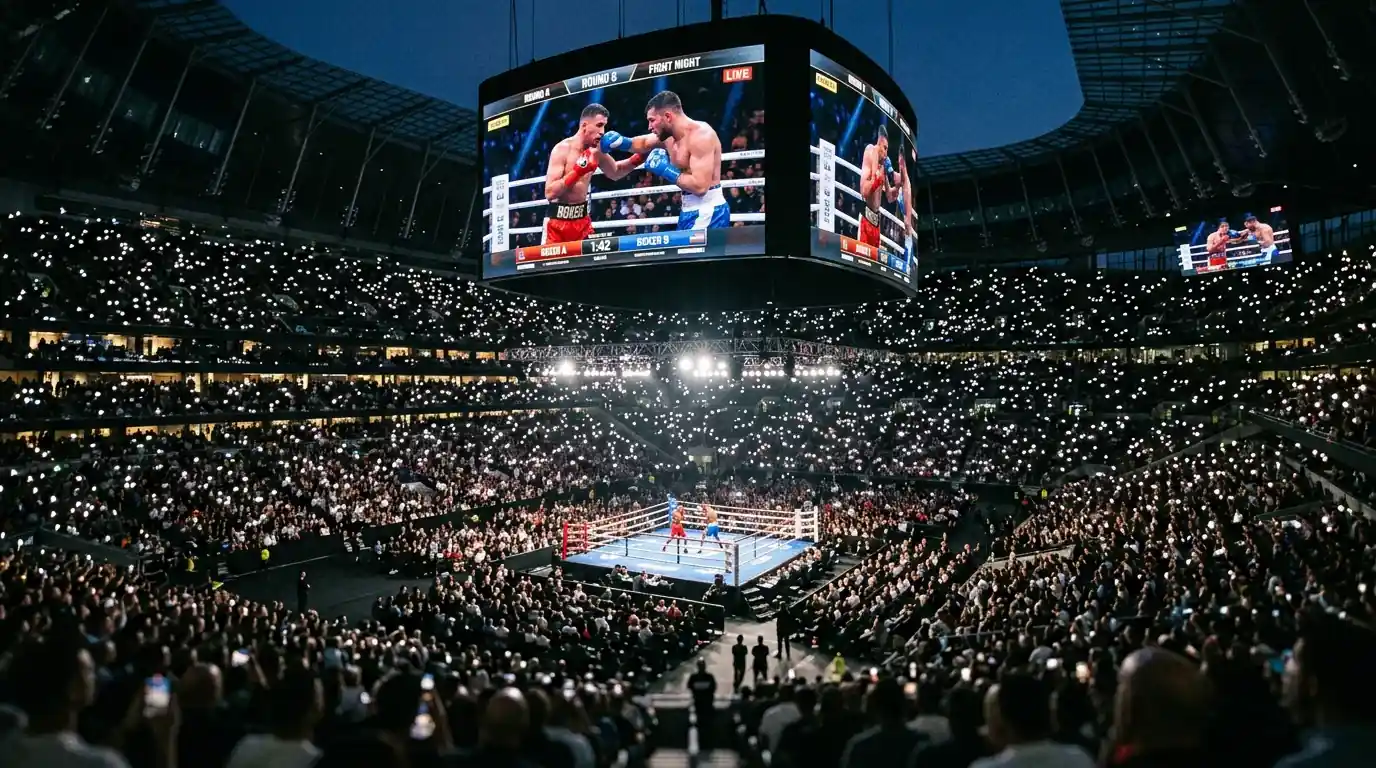
Compare the current landscape to 2017, when Anthony Joshua versus Wladimir Klitschko peaked at 11.5 million UK viewers on pay-per-view. That was considered a blockbuster. The Netflix-era numbers dwarf it. The structural shift from PPV to free streaming has removed the door entirely. The live boxing betting experience during these mega-events reflects a market operating at a pace and scale that would have been unrecognisable a decade ago.
UK Regulation and Betting Integrity
A colleague once told me that understanding boxing betting regulation is like understanding the rules of the ring itself — you can technically fight without knowing them, but you will get hurt eventually. The UK Gambling Commission sits at the centre of every legal boxing wager placed in this country, and its recent activity signals an authority that is becoming more interventionist, not less.
The Gambling Commission reported a 300% year-on-year increase in criminal cases taken forward during its latest reporting period. Andrew Rhodes, the Commission’s chief executive, specified that “those criminal cases are about betting integrity, they’re about cheating, they’re about illegal gambling.” For boxing, where individual bouts between two people create inherently higher manipulation risk than team sports, this enforcement posture is directly relevant.
The Commission oversees 2,179 licensed operators as of March 2025 — a figure that has been declining by 3.7% year on year as regulatory standards tighten and smaller operators exit the market. It issued 480 cease-and-desist orders to advertisers and operators in its latest financial year and sent 188,297 URLs to search engines for removal. These are not passive oversight numbers. This is an active regulatory machine with real enforcement teeth.
For punters, the most tangible regulatory change in recent memory is the affordability check threshold. Since February 2025, operators must conduct financial vulnerability checks when a customer’s net losses exceed 150 pounds within a 30-day period. The policy is designed to protect vulnerable gamblers, but it has practical implications for recreational bettors too — you may be asked to provide income documentation or face temporary account restrictions. Whether you view this as paternalistic or protective, it is the regulatory reality of UK boxing betting in 2026.
Betting integrity in boxing carries unique challenges. Unlike football, where match-fixing requires corrupting multiple players, a single boxer can influence a result. The unlicensed betting market in the UK is estimated at roughly 2.7 billion pounds annually, per the Betting and Gaming Council — and unregulated money creates unregulated incentives. The Commission’s escalating enforcement activity reflects an awareness that integrity threats are growing alongside the market.
What does all of this mean for you as a bettor? Three things. First, always verify your operator holds a valid UKGC licence — it is your only guarantee of dispute resolution, fund segregation, and self-exclusion access. Second, expect affordability checks and treat them as a feature of the system. Third, understand that the best boxing betting sites in the UK are those that operate well within regulatory bounds, not those that test the limits. The operators cutting corners today are the ones facing enforcement action tomorrow.
Responsible Gambling Tools and Self-Exclusion
I have a rule from my second year of boxing betting that I have never broken: I decide my stake before I look at the odds. It sounds trivial, but it eliminates the single most dangerous moment in the betting process — the moment when an attractive price tempts you to overextend. That discipline sits alongside a suite of tools that UK-licensed operators are required to provide, and I want to be direct about why this section is here. This is not a box-ticking exercise. It is the most important section in this guide.
The Gambling Commission classifies 2.7% of UK adults — approximately 1.4 million people, as problem gamblers scoring 8 or above on the Problem Gambling Severity Index. Among young people under 18, 1.2% meet the threshold for problem gambling on the DSM-IV-MR-J scale. Andrew Rhodes, the Commission’s chief executive, has stated that the survey findings “deepen our understanding of consequences from gambling” and has urged operators to “use this evidence to consider the risks within their own customer bases.” These are not abstract percentages. They represent real people whose relationship with gambling has become harmful.
Every UKGC-licensed operator must offer deposit limits, loss limits, session time limits, reality checks (periodic pop-up reminders of how long you have been betting and how much you have spent), and cooling-off periods. These tools are not buried in settings menus as a formality. Regulators actively audit their visibility and functionality.

Self-Assessment: Five Questions Before Any Boxing Bet
- Am I betting with money I can afford to lose entirely?
- Have I set a specific loss limit for this session — and can I commit to stopping when I reach it?
- Am I placing this bet based on analysis, or am I chasing a previous loss?
- Would I be comfortable telling someone I trust about the size of this stake?
- Have I used the deposit limit or reality check tools my operator provides?
GAMSTOP, the national self-exclusion scheme, allows you to exclude yourself from all UKGC-licensed online gambling operators for a minimum of six months. It covers every licensed operator — not just the one where a problem developed. For in-person betting, the Multi-Operator Self-Exclusion Scheme covers high-street bookmakers. These are blunt instruments by design: when the subtle tools have not worked, a hard stop is the responsible next step.
If you recognise any of the warning signs in yourself or someone you know — gambling more than you can afford, borrowing to fund bets, hiding the scale of your wagering from family, or feeling unable to stop, the National Gambling Helpline and GamCare provide free, confidential support. No boxing bet, however well-analysed, is worth compromising your financial security or mental health. I produce boxing betting strategy because I believe in informed, disciplined wagering — because discipline means knowing when to walk away.
Frequently Asked Questions
How do boxing betting odds work in the UK?
UK bookmakers primarily display fractional odds. The first number represents potential profit, the second represents the stake required. At 5/1, a 10-pound stake returns 50 pounds profit plus your original stake. Most operators also offer decimal and American formats as display alternatives — the underlying price stays identical regardless of format. To convert fractional odds to implied probability, divide the denominator by the sum of both numbers: at 5/1, the implied probability is 1 / (5 + 1) = 16.7%.
What types of bets can you place on a boxing match?
The core markets are moneyline (outright winner), round betting (exact round or round groups), method of victory (KO/TKO, decision, or disqualification), and over/under rounds (whether the fight lasts longer or shorter than a set number of rounds). Beyond these, proposition bets cover knockdown markets, total punches, scorecard margins, and fighter-specific specials. Bet builders allow you to combine multiple selections within a single bout into one wager at combined odds.
What happens to my bet if a boxing fight ends in a draw?
On most moneyline markets, a draw is treated as a separate outcome — meaning bets on either fighter to win are voided and stakes returned. However, settlement rules vary between operators and between market types. Some three-way moneyline markets include the draw as a priced outcome, in which case bets on either fighter lose if the fight is drawn. Always check your operator’s specific boxing settlement rules before placing a bet, particularly for method-of-victory and round-betting markets.
Can you bet on boxing live during the fight?
Yes. In-play boxing betting is available at most UK-licensed operators, with odds updating between rounds. Live markets typically include next-round winner, updated fight winner, and revised over/under rounds. Odds shift rapidly based on round-by-round action, and a knockdown can transform the entire in-play market within seconds. Cash-out options are often available during live betting, allowing you to lock in a profit or cut a loss before the fight concludes.
Is boxing betting legal and regulated in the UK?
Boxing betting is fully legal for anyone aged 18 or over in the UK when placed with an operator holding a valid UK Gambling Commission licence. The UKGC oversees all licensed operators, enforces responsible gambling requirements, and investigates betting integrity issues. As of March 2025, there are 2,179 licensed operators in the UK. Betting with unlicensed operators — including offshore or crypto-only platforms without UKGC approval, means forfeiting all regulatory protections, including dispute resolution and self-exclusion access.
What is the difference between KO, TKO, and DQ in boxing bets?
A knockout occurs when a fighter is knocked down and cannot rise before the referee counts to ten. A technical knockout covers stoppages where the referee, ringside doctor, or fighter’s corner ends the bout due to an inability to continue — covering cuts, sustained punishment, and corner retirements. Disqualification occurs when a fighter is penalised for rule violations, most commonly intentional headbutts, low blows, or biting. For betting purposes, most UK bookmakers group KO and TKO together as a single settlement category, while DQ is usually a separate outcome within method-of-victory markets.
How do weight classes affect boxing betting odds?
Weight classes significantly influence the probability of stoppages versus decisions. Heavier divisions — particularly heavyweight and super-middleweight, tend to produce higher knockout rates, which shifts the balance of method-of-victory and over/under markets. Lighter divisions generally see more fights going the distance, making decision bets and over-rounds selections more statistically viable. The difference between a 12-round men’s championship bout and a 10-round women’s fight also affects round-betting and totals pricing. Understanding these divisional patterns is a fundamental input for any fight-by-fight analysis.
Created by the ”bet on Boxing” editorial team.